)
)
)
Benneyworth: Tax changes are decimating small businesses
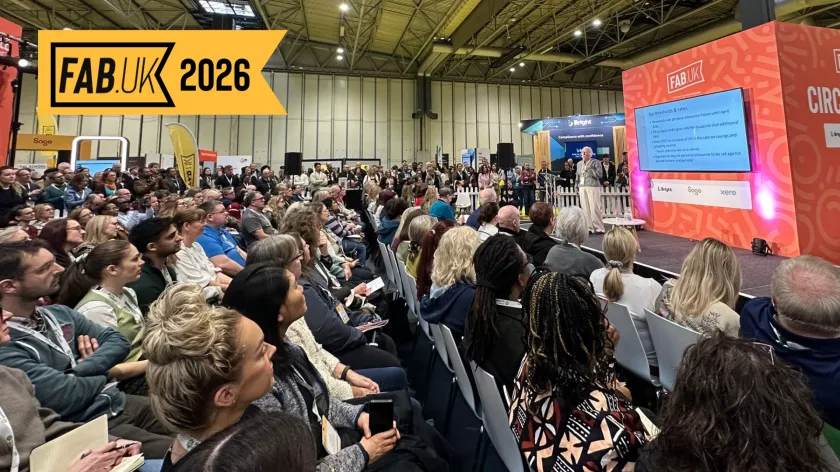
As the new tax year approaches, Rebecca Benneyworth opened day two of the Finance, Accounting & Bookkeeping Show (FAB) at Birmingham’s NEC with a technical tax briefing. The main focus of her keynote was the tax changes introduced in the Autumn Budget.
Benneyworth did not hold back her feelings on Rachel Reeves’s November fiscal plans. “It was the worst Budget in 35 years,” she said at the start of her keynote speech.
Echoing some of the themes discussed in Dan Neidle’s keynote on day one, Benneyworth criticised the Budget for having no discernible structure. “It was just, there’s some money there, we’ll have it,” she said.
Wide-ranging technical briefingThe wide-ranging technical briefing covered tax challenges from an increase in late-filing penalties for corporation tax, the rise in dividend tax and the complexities of payrolling benefits and company cars, and much more.
Over the course of the briefing, Benneyworth shared stories of her clients that illustrated the impact of the changes introduced during the Budget. One of the most pernicious examples is the increase in minimum wage.
The Autumn Budget in November brought increases to the national minimum wage (NMW), which will come into effect from April. The headline increase of the national living wage of 4.1% might be the smallest on record, but it coincides with an inflation-busting 8.5% increase to the NMW for 18- to 20-year-olds.
Impact of employer national insurance riseThe increase comes as small businesses still haven’t recovered from the increase in employer national insurance contributions (NIC) from 13.8% to 15% from 6 April 2025.
“Obviously a lot of my clients are feeling the pressure. I’m going to see a client who is running a cafeteria on Monday to help her with budgeting with staff. She just had to put her prices up but she doesn’t know how much price elasticity she still has left.
“She is very hard hit by the NIC change last year because most of her staff are part-time and earning under £7,000 and not liable for employer NIC,” she said. “She’s now paying national insurance even though the employment allowance has more than doubled.”
Accommodation offset rules
Another example of troubles with minimum wage highlighted issues with accommodation offset rules.
It involved a farm shop that provides holidays for children in the inner city. There are three businesses alongside each other, with the farm as a partnership, and the farm shop is run by a limited company. The farm shop had a minimum wage inspection following a PAYE inspection. This unearthed an issue with minimum wage.
“The employer is trying to help their staff since the farm is an expensive area in the Cotswolds,” said Benneyworth. “There just isn’t housing for people who would work on farms – not to rent and not to buy. It would be way out of their reach. So what the owner of the business has done is provide a few cottages at half market rent to their staff, so that they can live nearby.
“That’s all brilliant, except it doesn’t work. The reason it doesn’t work is that the employees are paying rent. They’re paying rent to the farm, but the rent reduces minimum wage if an employee is renting from their employer or a connected party. The farm is actually not their employer, but it’s the same owners.”
The employees are being paid more than minimum wage, but because of the accommodation offset rule they are below minimum wage. This means the employer is facing a back bill of about £25,000 and penalties of £50,000. It’s 200% of the underpayment.
“That will put them out of business,” Benneyworth said. “All of those staff will not only have a job, but they won’t have a home either.
“It started from the best of intentions. The employer was really trying to help low-paid staff, who unfortunately happen to live somewhere that is really, really expensive, because all the TV stars and the pop stars are all buying up all the property. And it ends up with a genuine business potentially going insolvent, and all those staff losing their jobs. So something is wrong with this legislation.”
More minimum wage compliance pressureMore pressure will be applied to minimum wage compliance from April with the introduction of the Fair Work Agency, a new enforcer for minimum wage compliance.
“If you want to read something that will send shivers down your spine, find the Red Book from the November Budget, and search for Fair Work Agency and see what the government thinks they’re going to do. They’re going to investigate every complaint by an employee who thinks their employer has been unfair to them.
“That will solve the unemployment problem, won’t it?” continued Benneyworth. “Because they’ll have to employ half the population to do that. The Fair Work Agency is coming your way – and it’s going to impact your clients.”
Strain on small businessesThe impact of increases to the national minimum wage and the strain this has on small businesses was an issue Benneyworth raised in her 2025 FAB keynote. “I’m worried about some of my clients,” she said at last year’s event.
She called the increases “quite scary” and reported that the rise in national minimum wage for young workers had caused some of her clients to question whether there was value in hiring workers under 20 years old.
Rebecca Benneyworth was speaking on 12 March 2026 at the Finance, Accounting & Bookkeeping Show (FAB). We’ll be exploring more topics from Benneyworth’s keynote session in the coming weeks.
)
)
)
)
)